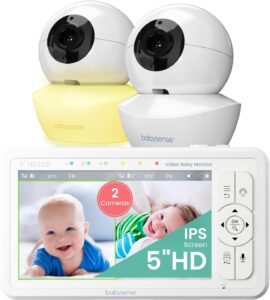
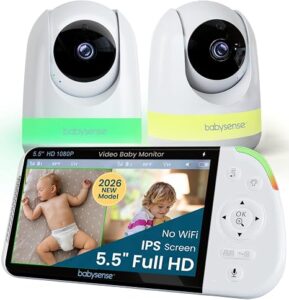
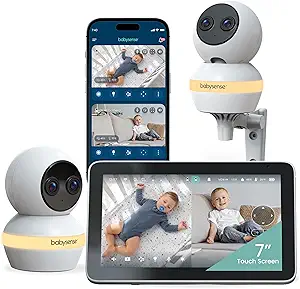
How We Evaluated Babysense Baby Monitor Products
Baby monitor evaluation centres on the features that matter most for parental peace of mind: video clarity, audio quality and sensitivity, range reliability, night vision performance, battery life, and the accuracy of any vital-monitoring features. Our review process tested each monitor category in real home environments across different distances, building materials, and interference conditions. Safety certifications, EMF emission levels, and data privacy practices for Wi-Fi-connected models were also examined given their particular relevance when monitoring infants.
Video Quality, Night Vision, and Real-World Performance
Video baby monitor quality is best assessed in the conditions parents actually use them — typically in low or zero-light environments where night vision is the primary imaging mechanism. We tested night vision performance across different room sizes, evaluating clarity at both close range and distance, colour accuracy on colour night vision models, and the speed at which cameras adjusted to changing light conditions. Auto night vision switching — how quickly a camera responds to room light changes — was a significant performance differentiator between models.
Two-way audio quality affects both parent monitoring and soothing capabilities. We assessed microphone sensitivity for detecting soft infant sounds across different room sizes and evaluated speaker quality for the lullaby and white noise features common in modern monitors. Minimal audio delay on parent unit displays is important for accurately correlating what parents see with what they hear, particularly for monitors with significant Wi-Fi processing latency.
Range, Connectivity, and Battery Performance
Manufacturer range claims for baby monitors rarely reflect real home performance, where walls, floors, and household interference reduce effective range significantly. We tested each monitor's actual range in multi-room, multi-floor residential settings to provide realistic performance expectations. FHSS (Frequency Hopping Spread Spectrum) monitors demonstrated more reliable signal maintenance in interference-rich environments than fixed-frequency alternatives.
Battery performance on parent units determines how convenient cordless monitoring actually is. We recorded actual battery runtime under continuous use at typical screen brightness settings and compared this to manufacturer claims. Models offering eight or more hours of continuous use score highest for overnight monitoring convenience, while those requiring frequent recharging impose practical limitations on placement flexibility.
Choosing the Right Monitor for Your Nursery Setup
The right baby monitor depends on your home layout, privacy preferences, and budget. Wi-Fi monitors offer remote access and smartphone integration but introduce data security considerations that dedicated frequency monitors avoid entirely. Vital-monitoring products add a layer of breathing and movement alerts but require careful positioning and understanding of alert sensitivity settings to avoid false alarms. Prioritise range reliability and night vision quality above feature count for most nursery monitoring needs.